Decorative Peacock: A Designer’s Real-World Embroidery Review
As a designer who’s stitched over 300 custom embroidery projects—from boutique baby onesies to Etsy best-selling tote bags—I opened Decorative Peacock expecting elegance. What I found was something more practical: a balanced, confident graphic that breathes well under thread, not just on screen. It’s not overly ornate, but it’s not minimalist either—just right for makers who value clarity, charm, and commercial versatility.
First Impressions: Grace Without Gimmick
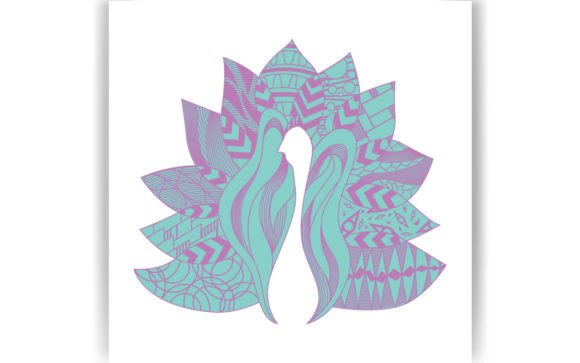
The moment you zoom in, Decorative Peacock feels intentional. Its silhouette is bold enough to read at 3” wide on a sweatshirt, yet detailed enough to hold interest at 5” on a pillow cover. The tail feathers fan with gentle rhythm—not symmetrical, but harmonious—and the eye motif sits cleanly within the curve of the neck. There’s no frantic layering or pixelated edge; because it’s built in Adobe Illustrator and delivered as vector EPS, AI, SVG, PNG, and high-res JPEG, scaling is seamless. That matters when you’re prepping a design for both a tiny embroidered patch and a large kitchen towel.
How It Stitches: Where This Design Truly Shines
I tested Decorative Peacock across three real-life scenarios: a linen tea towel for a local craft fair, a cotton baby onesie for a personalized gift listing, and a heavyweight canvas tote bag for a small shop launch. In each case, the design held up—not perfectly identical across fabrics, but consistently legible and pleasing.
- Custom apparel & sweatshirt embroidery: On midweight fleece, the peacock’s curves translated beautifully into satin stitch feathering—no skipped stitches or puckering, especially when paired with medium-weight cutaway stabilizer.
- Embroidered patch & tote bag design: At 4.2”, the outer tail details stayed crisp without becoming dense. No fill-stitch flooding, no “thread soup”—just clean transitions between running stitch outlines and soft satin fills.
- Baby embroidery & holiday gifts: On 100% cotton interlock, the design retained its delicate personality without requiring ultra-fine needles or specialty threads. It reads as handmade—not machine-perfect, but warmly human.
This isn’t a “set-and-forget” embroidery file. But it *is* a forgiving one—ideal for Etsy sellers building consistent product lines or craft business owners expanding their digital embroidery file library.
Where to Use It Thoughtfully (Not Just Everywhere)
Decorative Peacock earns trust because it knows its limits. It’s not suited for every surface—and that’s a strength, not a flaw.
- Avoid tight hoop sizes under 4”: The inner eye detail and feather tip gradients soften below that scale. If you’re making cap embroidery or tiny keychain patches, simplify first—or choose a tighter, bolder variant.
- Texture matters: On heavily textured fabrics like bouclé or thick terry cloth, reduce stitch density slightly and reinforce with tear-away + cutaway stabilizer combo. The design’s grace comes from smooth flow—not grit.
- Dark fabric? Check contrast early: Test thread colors against black or navy before stitching. The peacock’s subtle shading works best with tonal thread choices (e.g., teal-to-emerald gradient) rather than stark white on charcoal.
- Curved surfaces (caps, mugs, curved pillows): The shape flows naturally around gentle curves—but avoid placing the full tail directly over a seam or deep gusset where distortion risks blurring the lower feathers.
What This Design Adds to Your Finished Product
It’s rare to find a single graphic that lifts perceived value *and* supports brand consistency. Decorative Peacock does both—not by shouting, but by settling in with quiet confidence.
On a handmade product, it signals care: the kind of detail that makes customers pause, tilt their head, and say, “Oh—this is special.” For a personalized gift, it adds narrative warmth without cliché. As part of a boutique branding suite, it pairs effortlessly with neutral linens, muted ceramics, or hand-printed stationery. And for an Etsy seller? It performs well in printable mockups—clean edges, strong silhouette, no awkward transparency gaps in the PNG or SVG.
Most importantly, it builds customer trust. When buyers see how clearly the feathers resolve in thread—how evenly the beak sits, how smoothly the neck curves—they believe in your craftsmanship, not just your listing photos.
Practical Notes Every Embroidery Designer Should Run Through
Before you load Decorative Peacock into your machine or drop it into a client’s quote, take five minutes to ground it in reality:
- Test on scrap fabric matching your final project’s weight and weave—even if it’s “just a sample.”
- Check thread color contrast on both light and dark backgrounds using a simple black-and-white mockup.
- Review stitch density: if your machine flags heavy fill areas, consider simplifying feather tips manually or adjusting underlay.
- Confirm hoop size compatibility—especially if you’re stitching for commercial embroidery services that require specific dimensions.
- Inspect small details at actual stitch size: zoom in on the eye motif and lowest tail feather tips. Do they resolve cleanly, or blur?
- Use proper stabilizer—medium cutaway for stable wovens, tear-away + light cutaway for knits.
- Verify licensing terms before selling finished items or reselling the digital embroidery file. The product details list formats (SVG, PNG, AI, JPG, EPS), but not usage rights—so double-check before scaling commercially.
Decorative Peacock doesn’t try to be everything. It’s a focused, well-built graphic rooted in Crafts and Graphics sensibility—designed not just to look good, but to work across real embroidery projects, real fabrics, and real customers. Whether you're stitching for joy, gifting with meaning, or building a craft business, this is the kind of design that earns repeat use—not just once, but season after season.