Decorative Abstract Coloring Page Book: Graphics for Real Branding
As a brand designer who’s developed visual identities for over 40 local businesses—from artisanal candle studios in Portland to family-run bakeries in Nashville—I recently evaluated the Decorative Abstract Coloring Page Book not as clipart, but as a functional graphic design asset for small business branding. My test case? A new line of lavender-honey skincare products launching this spring at a women-owned apothecary in Asheville. The goal: cohesive, tactile, and emotionally resonant packaging that feels handmade yet polished—no stock clichés.
First Impression: Organic, Playful, and Quietly Sophisticated
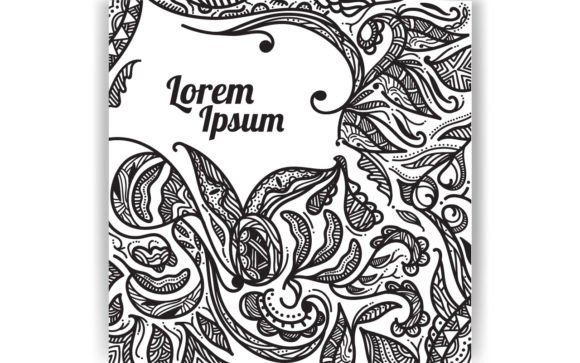
The Decorative Abstract Coloring Page Book opens with flowing linework, asymmetrical balance, and intentional negative space—not chaotic doodles, but considered abstraction. It reads as organic and mindful, suggesting calm creativity rather than rigid geometry. For local brands rooted in craft—think handmade soap labels, botanical tea packaging, or ceramic studio posters—it conveys warmth without sacrificing modernity. It leans feminine but not saccharine, decorative but never overwhelming. It feels premium when printed on uncoated kraft paper, friendly when scaled down for sticker accents, and quietly elegant beside serif typography.
Where It Earns Its Place in Real Business Design
This isn’t just printable coloring content—it’s a versatile design layer that strengthens brand identity across touchpoints:
- Packaging design: Used as a subtle border on jar labels or as a full-bleed background on gift boxes (with 30% opacity), it adds texture without competing with product names or ingredients.
- Product label accents: A single motif from the collection—say, an abstract vine or geometric bloom—works beautifully as a corner flourish next to batch numbers or “hand-poured” callouts.
- Social media graphics: Exported as SVG or high-res PNG, these elements scale flawlessly for Instagram carousels, Reels overlays, and Pinterest-ready printable promos—especially effective for “behind-the-scenes” or seasonal campaign visuals.
- Printable inserts & thank-you cards: Customers love tactile touches. Including a mini version of a coloring page inside a candle box—or as a branded postcard with purchase—builds emotional connection and encourages repeat visits.
- Menu graphics & price lists: For cafés or boutiques using chalkboard-style menus, the line-based nature translates cleanly into digital mockups or vinyl decals.
- Seasonal campaign visuals: During fall launches or holiday gifting, these motifs adapt seamlessly—layered behind hand-lettered copy or paired with warm-toned photography for cohesive web banners and email headers.
Why Local Brands Benefit Most
Small business branding thrives on consistency and authenticity—and the Decorative Abstract Coloring Page Book delivers both. When applied thoughtfully, it supports:
- Stronger first impression: Shoppers scan shelves in under 3 seconds. A well-placed abstract motif signals intentionality—not “designed in Canva,” but crafted.
- Better product recognition: Repeating one signature motif across labels, stickers, and social posts builds subconscious familiarity—even before customers read your name.
- Clearer visual hierarchy: Because the lines are clean and open, they frame key information (like flavor names or scent notes) without visual noise.
- More consistent brand identity: Unlike generic clipart, these assets share a unified stroke weight, rhythm, and spacing—critical for professional branding.
- Improved customer trust: Thoughtful decoration signals care. That perception transfers directly to perceived product quality—especially vital for food labels, skincare, and handmade goods.
Where It Works Best—And Where to Pause
Best used for: Product mockups, boutique visuals, hero website banners, hang tags, seasonal packaging accents, thank-you cards, and editorial-style social media graphics. It shines when supporting—not leading—the message.
Use carefully on: Very small labels (under 1.5” width), ingredient-heavy layouts where legibility is non-negotiable, legal disclaimers, low-contrast backgrounds (test grayscale first), or luxury minimalist brands where whitespace is the hero. Avoid pairing it with overly busy fonts or dense photographic backgrounds—it needs breathing room.
Practical Designer Notes You’ll Actually Use
Before committing to the Decorative Abstract Coloring Page Book in client work, I always run these checks:
- Test it on real packaging mockups—not just digital previews—to assess scale, contrast, and print fidelity.
- Convert to black and white: Does the line integrity hold? Will it reproduce clearly on thermal receipt printers or basic inkjet labels?
- Preview at 120% and 50% scale: Does it lose definition when enlarged for posters or become muddy when shrunk for QR code stickers?
- Layer it over your brand colors: Does the linework pop against your primary palette—or vanish into mid-tones?
- Compare side-by-side with top 3 local competitors’ packaging: Does it differentiate your brand, or blend in?
- Check SVG editability: Are anchor points clean? Can you isolate and recolor individual components for flexible reuse?
- Test transparency in PNG exports: Does the background drop cleanly for layered designs in Illustrator or Canva?
- Pair it with your full font stack: How does it sit beside serif, sans serif, script, handwritten, and display type? Some motifs harmonize best with organic letterforms; others suit geometric fonts.
- Confirm commercial license terms: This is non-negotiable. Ensure usage covers physical product sales, client branding, and digital marketing—not just personal projects.
The Decorative Abstract Coloring Page Book isn’t filler. It’s a strategic tool—especially for local business owners, handmade sellers, and creative entrepreneurs building brands rooted in authenticity. When treated as part of a thoughtful system—not just decoration—it elevates packaging design, sharpens marketing visuals, and deepens customer connection. And in a crowded marketplace where attention is scarce and trust is earned slowly, that kind of quiet impact matters most.